
In a shocking cybersecurity incident, the official update mechanism of Notepad++, one of the world’s most popular open-source text editors, was reportedly hijacked to distribute malware to select users. The breach has raised serious concerns about software supply chain security and the growing sophistication of targeted cyberattacks.
What Happened?
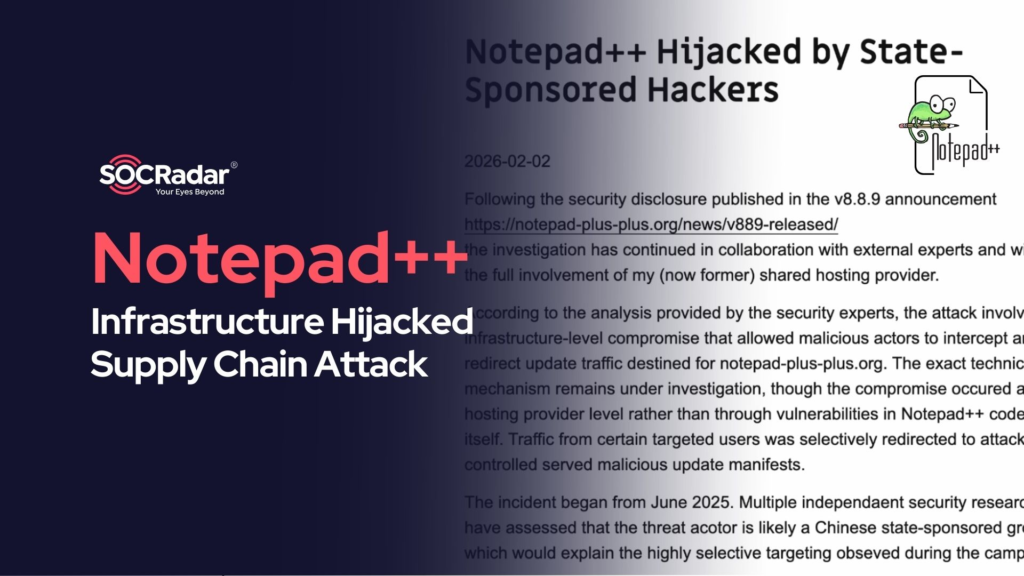
According to cybersecurity reports, attackers managed to manipulate the official update channel of Notepad++ to deliver malicious payloads. Instead of receiving legitimate software updates, certain users unknowingly downloaded malware disguised as an official update.
Unlike mass-scale attacks, this incident appears to have targeted specific users, making it a highly selective and strategic attack rather than a widespread infection.
How the Attack Worked
Cybercriminals often exploit trusted systems to bypass security defenses. In this case, the attackers likely:
- Intercepted or compromised the update server or distribution channel
- Replaced legitimate update files with malicious versions
- Targeted specific IP addresses or geographic regions
- Used malware capable of remote access, data theft, or system control
Because updates typically come from trusted sources, many security systems may not immediately flag them as suspicious.
Why This Attack Is Concerning
Notepad++ is widely used by:
- Developers
- IT professionals
- System administrators
- Students and tech enthusiasts
If compromised, infected systems could expose sensitive source code, credentials, or confidential business data.
This breach highlights a growing threat known as a software supply chain attack, where hackers target the update mechanism of trusted software to infect users.
Who Was Affected?

Reports suggest the malware was delivered only to selected users, not the entire user base. This selective targeting indicates:
- Advanced reconnaissance by attackers
- A possible espionage motive
- Higher-level cybercriminal capabilities
Investigations are ongoing to determine the exact scope and impact.
What Should Users Do?
If you are a Notepad++ user, take the following precautions:
1. Verify Your Installation
- Download software only from the official website.
- Check digital signatures of the installer.
2. Run a Security Scan
- Use updated antivirus or endpoint protection software.
- Perform a full system scan.
3. Monitor System Activity
- Watch for unusual network traffic.
- Check for unknown background processes.
4. Update Safely
- Ensure you are using the latest verified and secure version.
The Bigger Cybersecurity Lesson

This incident serves as a reminder that even trusted software platforms are not immune to cyber threats. As cyberattacks become more advanced, organizations and individuals must:
- Implement multi-layered security
- Use endpoint detection systems
- Enable firewall protection
- Regularly audit software updates
Supply chain security is now one of the biggest challenges in cybersecurity worldwide.
Incident Summary Table
| Category | Details |
|---|---|
| Software Affected | Notepad++ |
| Type of Attack | Software Supply Chain Attack |
| Attack Method | Hijacked Official Update Mechanism |
| Target | Selected / Specific Users |
| Risk Level | High (Targeted Malware Distribution) |
| Possible Impact | Data Theft, Remote Access, System Compromise |
| Recommended Action | Verify installation, Run antivirus scan, Update securely |
Final Thoughts
The Notepad++ update breach underscores the importance of vigilance in today’s digital environment. Even official update channels can become attack vectors if compromised. Users must stay informed, verify updates, and follow cybersecurity best practices to minimize risk.
As investigations continue, this incident may push software developers to strengthen update verification systems and improve transparency around security incidents.
Cross-Border Technology: How Innovation Is Connecting the World in 2026
In 2026, technology is no longer limited by geography. From global startups collaborating across continents…

Nintendo Direct 2026: New Console Updates, Game Reveals & Tech Innovations
Nintendo Direct 2026 created major excitement across the gaming industry. During the event, Nintendo presented…

CRM Stock Analysis 2026: Is Salesforce a Smart Investment Right Now?
Salesforce (NYSE: CRM) remains one of the most influential technology companies in the world. As…

Security Breach: Notepad++ Official Update Mechanism Used to Distribute Malware
In a shocking cybersecurity incident, the official update mechanism of Notepad++, one of the world’s…
Moltworker – Build Your Own Private AI Agent Without Compromise
The Internet woke up this week to a flood of people buying Mac minis to run Moltbot (formerly Clawdbot),…

The Technology Behind Tomodachi Life: How Nintendo Created a Smart Social Simulation
Tomodachi Life may look like a simple and funny life-simulation game, but behind its colorful…

#NotepadPlusPlus #CyberSecurity #MalwareAttack #SupplyChainAttack #SoftwareSecurity #TechNews #CyberThreat #DataSecurity #HackingNews #SecurityBreach #UpdateVulnerability #CyberAwareness #TechAlert #DeveloperSecurity #InformationSecurity #Carrerbook #Anslation