
Let’s face it: for a long time, keeping up with tech felt exhausting. Moreover, Tech & Gadgets pushes the idea that you need a new gadget with many features you will never use.
Well, breathe a sigh of relief, because 2026 has completely changed the game.
The tech world, including Tech & Gadgets, has finally matured.
Moreover, this year is about seamless intelligence, invisible automation, and gear that solves real-life friction.
Whether you’re a hardcore gadget nerd or you want your phone to stop acting up, you have expectations. Here is the ultimate, completely human breakdown of trends ruling 2026.
Edge AI: The Assistant That Actually Knows What You Mean
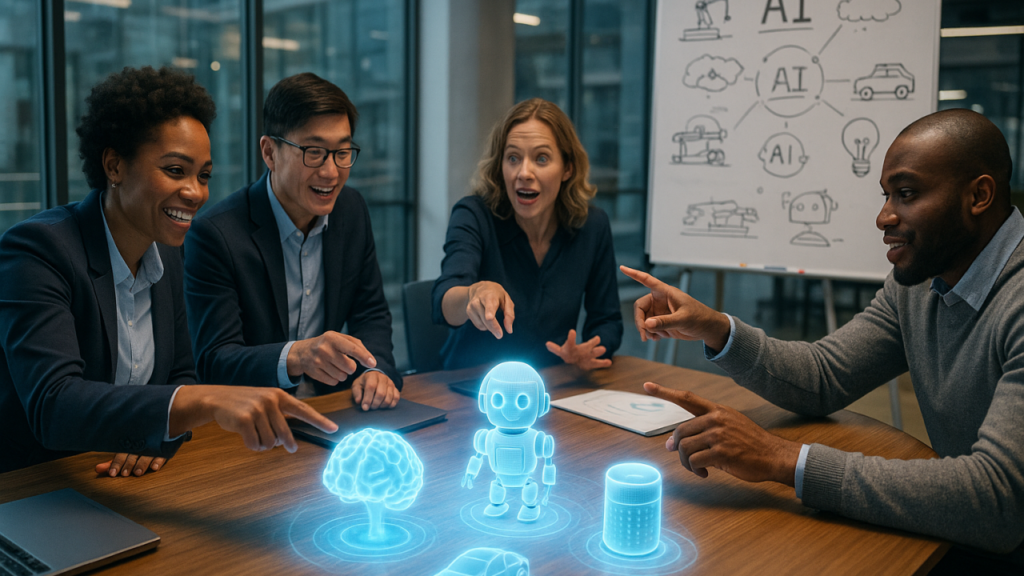
Remember when voice assistants used to misunderstand basic questions and try to pull up a recipe when you asked for the weather? Those days are long gone.
- The Trend: Artificial Intelligence in 2026 has moved away from clunky cloud servers and straight onto our local devices via advanced Neural Processing Units (NPUs). This means your phone, laptop, and smart home hub process commands instantly, completely offline, and with extreme privacy.
- Why It Matters: AI isn’t a separate app you open anymore; it is the invisible operating backbone of everything. It predicts your schedule, filters out digital spam before you even see it, and drafts notes in your exact personal writing tone without sending your private data floating into the cloud.
The Rise of Invisible Wearables & Smart Rings
Smartwatches are great, but let’s be honest—nobody actually wants a glowing, bulky screen strapped to their wrist while they are trying to sleep or enjoy a quiet dinner.
- The Trend: 2026 belongs to ultra-low-profile wearables, specifically titanium smart rings. These tiny bands pack microscopic medical-grade sensors that track your sleep patterns, heart rate variability, and stress levels without constantly pinging you with notifications.
- Why It Matters: It’s wellness tracking without the tech fatigue. You slip it on your finger, forget it’s even there, and let it quietly look out for your health in the background.
Spatial Computing and Lightweight AR Glasses

For years, virtual and augmented reality meant strapping a massive, heavy brick to your face that made you look like a sci-fi character trapped in a video game.
- The Trend: AR glasses have finally shed their weight. The newest models look and feel almost identical to a sleek, premium pair of everyday sunglasses, projecting crisp, high-definition virtual screens directly into your field of view.
- Why It Matters: Imagine walking through a new city while subtle turn-by-turn navigation arrows float right in front of your eyes, or sitting on an airplane with a private 120-inch virtual screen streaming your favorite movie while everyone else stares at a tiny tablet.
Ambient Smart Homes (That Don’t Require Screaming)
Smart homes used to be a frustrating chore.
Moreover, it was filled with dropped Wi-Fi connections, incompatible apps, and shouting voice commands across the room.
- The Trend: Thanks to universal connection standards like Matter, combined with ambient sensors, smart homes finally work like magic.
- Why It Matters: Your house now anticipates your needs quietly. Lighting shifts its color temperature to match the natural rhythm of the sun to help you stay focused or wind down, and intelligent thermostats learn your habits to effortlessly slash your monthly utility bills.
AI goes physical: Navigating the convergence of AI and robotics

Amazon deployed its millionth robot.
Additionally, in Tech & Gadgets, DeepFleet AI coordinates the entire robot fleet, improving travel efficiency within warehouses by 10%.
Furthermore, BMW’s factories have cars driving themselves through kilometer-long production routes.
Moreover, Intelligence isn’t confined to screens anymore.
It’s embodied, autonomous, and solving real problems in the physical world.
The agentic reality check: Preparing for a silicon-based workforce
Only 11% of organizations have agents in production, despite 38% piloting them. The gap between pilot to production tells you everything. Forty-two percent are still developing their strategy, while 35% have no strategy at all. Gartner predicts that 40% of agentic projects will fail by 2027—not because the technology doesn’t work, but because organizations are automating broken processes instead of redesigning operations. HPE’s chief financial officer captured what works: “We wanted to select an end-to-end process where we could truly transform, not just solve for a single pain point.” Redesign, don’t automate. That’s the pattern separating success from failure.
The AI infrastructure reckoning: Optimizing compute strategy in the age of inference economics
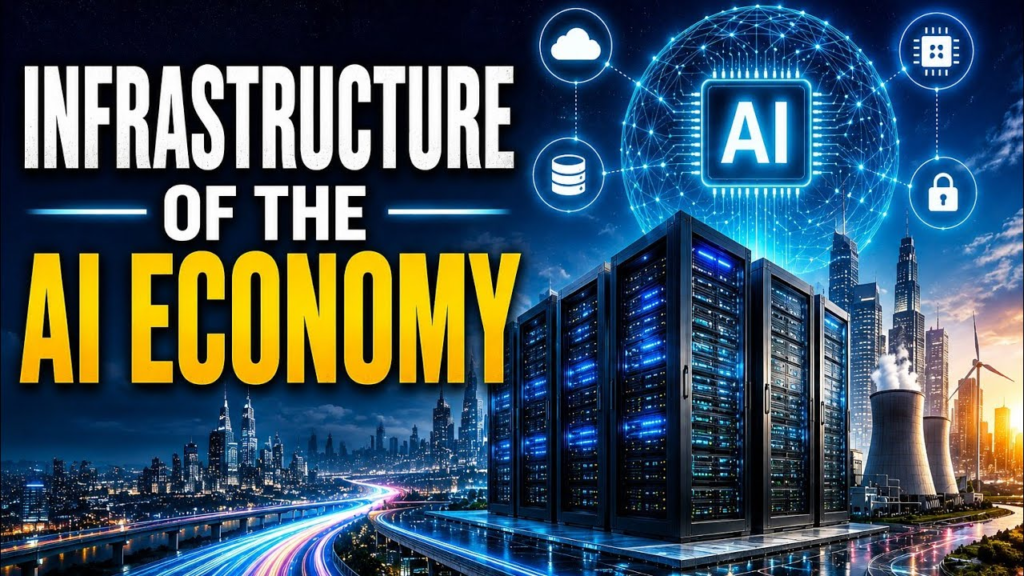
Token costs have dropped 280-fold in two years; yet some enterprises are seeing monthly bills in the tens of millions. Usage exploded faster than costs declined. Organizations are discovering their existing infrastructure strategies aren’t designed to scale AI to production-scale deployment. They’re shifting from cloud-first to strategic hybrid: cloud for elasticity, on-premises for consistency, and edge for immediacy.
AI can no longer be stopped
The question is no longer whether AI will outperform humans in many tasks, but how the economy will reorganize around that fact. Models are improving at an unstoppable pace, and competition not only between companies but also between countries is turning AI into a geopolitical issue. The incentives are strong, and the stakes are high.
Agents will take the lead

The real breakthrough will be AI that acts, not just AI that responds.
Agents are software applications that, using language models, can reason and act for us.
Their decisions enable buying goods, negotiating, planning trips, or managing business processes.
While adoption remains limited, 2026 will bring gradual Tech & Gadgets integration into daily life.
This will transform how we work and interact, almost without notice.
Autonomous mobility will reshape cities
Driverless vehicles already operate 24/7 in many major US and Chinese cities in a safe and accessible manner. Their expansion will make it possible to reduce the number of privately owned cars and rethink urban design, leading to less congested and more decentralized cities.
Logistics will enter a new league

Autonomous trucks and new battery technologies will drastically reduce logistics costs, particularly thanks to the adoption of sodium batteries, which are cheaper and longer-lasting. This will shorten supply chains, reduce inventories, and generate major advantages in industrial competitiveness. China is clearly leading the way in this field.
Agentic software development
Agentic software development refers to the use of large language model (LLM)–powered systems that autonomously perform software engineering tasks, including planning, writing code, running tests, fixing bugs, and deploying changes. AI coding tools are shifting engineers from hands-on coders to agent supervisors.
In 2022, the interest score for Agentic software development was 0.02 on a scale from 0 to 1, where 0 is low and 1 is high. The innovation score was 0 on the same scale. The adoption rate was scored at 3. The investment in 2022 was 0 on a scale from 1 to 5, with 1 defined as “frontier innovation” and 5 defined as “fully scaled.” The investment was 0 billion dollars. By 2025, the interest score for Agentic software development was 0.07. The innovation score was 0. The investment was 5 billion dollars. Job postings within this trend changed by 221 percent from 2024 to 2025
FAQs
1. What are the latest tech trends to know about in 2026?
Some major technology trends include artificial intelligence, smart devices, wearable technology, connected home products, and more personalized digital experiences.
2. What are the most popular gadgets to look out for in 2026?
Smartphones, smartwatches, wireless earbuds, AI-powered devices, smart home products, and portable accessories continue to attract attention from technology users.
3. How is AI changing everyday technology?
AI is becoming part of many everyday tools, helping with tasks such as search, writing, recommendations, image creation, productivity, and personalized device features.
4. Are smart home gadgets worth considering in 2026?
Smart home gadgets can be useful for convenience, automation, entertainment, and energy management. Their value depends on your needs, budget, compatibility, and privacy preferences.
5. What should I check before buying a new gadget?
Check the key features, compatibility, battery life, durability, software support, warranty, privacy settings, and overall price before making a purchase.
Latest Beauty Tips and Ideas for Everyday Self-Care
Let’s be completely real for a second. If you scroll through social media right now,…
Useful Tech & Gadgets You’ll Want to Try in 2026
Let’s be completely real for a second. If you look at tech magazines ,gadget review…

Real Product Reviews and Simple Tips for Better Shopping
Shopping online used to be simple. You found an item, read a couple of reviews,…

Home & Living Ideas to Make Your Space More Beautiful and Useful
The right window treatments can make a bedroom feel more polished and personal. Home &…

Latest Fashion Trends: What to Wear in 2026
Let’s take a quiet second, grab a cup of coffee, and Fashion have a completely…

Ultimate 2026 Shopping Deals and Discounts You Need
We should have a real, heart-to-heart conversation without corporate fluff. Additionally, we will avoid robot…